DINOSAUR SCIENCE · 4 MIN READ
Did Dinosaurs Get Sick? Injuries and Disease Written in Bone
Discover healed wounds, a dinosaur cancer diagnosis, and evidence of respiratory infection, with clear limits on what fossils can reveal.
By Dinosaur Sounds ·
The short answer
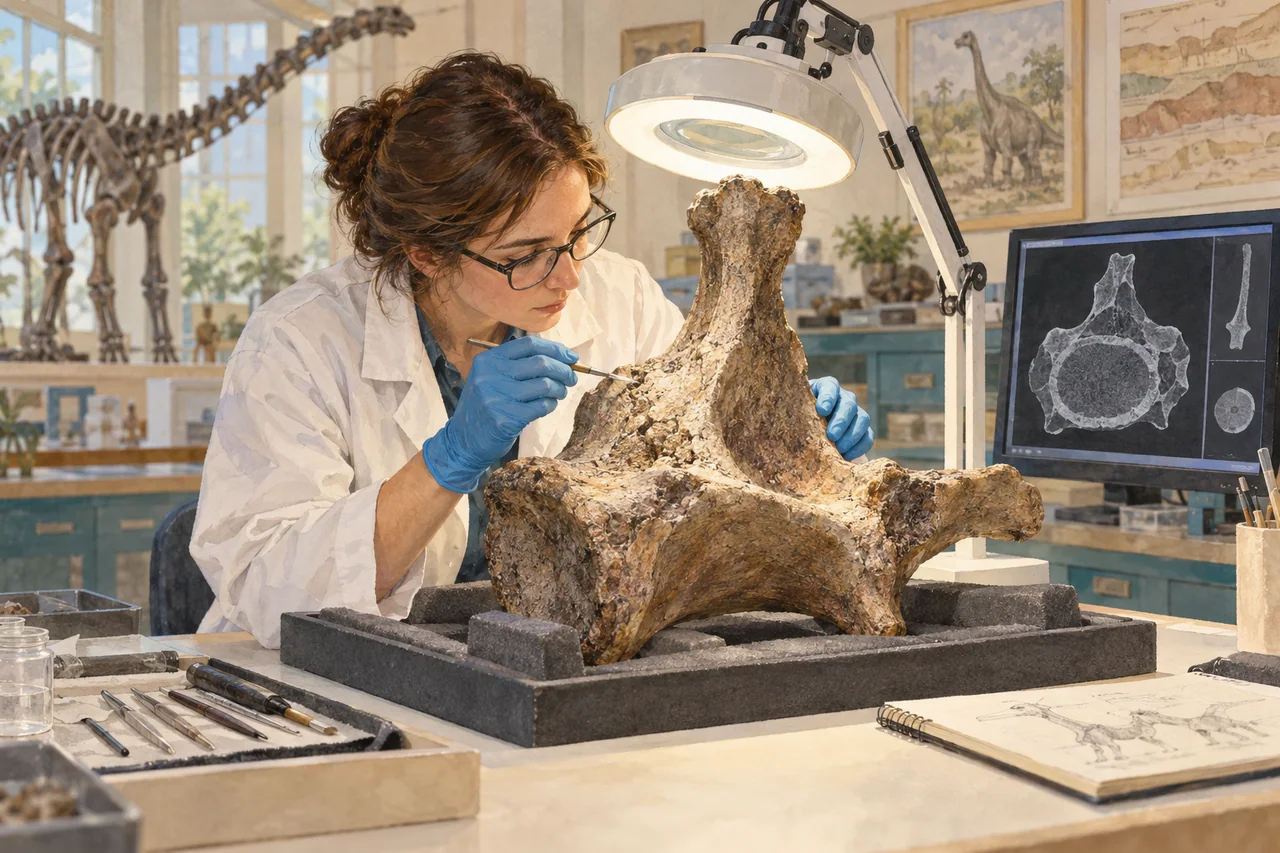
Dinosaurs suffered injuries and diseases, just as living animals do. Some fossils preserve healed fractures, abnormal growth, or damage linked to infection. Scientists investigate those changes using anatomy, scans, and microscopic study, while separating illness from damage that happened after death.
A fossil skeleton is therefore more than a guide to an ideal dinosaur body. It can preserve evidence of what happened to one particular individual.
The clue that an animal survived
Living bone can repair itself. A fracture may develop new bone around the damaged area, and an injury can change the shape of a joint or surface.
If a fossil preserves convincing healing, the animal lived after the injury occurred. The American Museum of Natural History's Triceratops description includes a partly healed skull injury that may have resulted from conflict.
The possible cause needs more evidence than the healing itself. A damaged bone might record a fall, a bite, or another event. Surviving an injury also does not automatically prove that other dinosaurs provided care.
Was the damage made before or after death?
Fossils can crack under pressure, erode in the ground, or be damaged during excavation. Those processes can produce unusual surfaces that resemble pathology.
Researchers inspect how the bone responded and whether the surrounding material shows related changes. They also compare the feature with normal variation and with conditions in living animals.
A hole or swelling becomes meaningful through that investigation. Calling every irregularity an ancient disease would turn preservation damage into an invented medical history.
A cancer diagnosis in Centrosaurus
Researchers studying a Centrosaurus lower-leg bone used imaging, detailed examination, and comparisons with other bones to diagnose osteosarcoma, a malignant bone cancer.
The McMaster University report describes the collaboration involved. The diagnosis relied on a combination of evidence rather than an unusually shaped fossil alone.
This demonstrates that such disease existed in dinosaurs. It does not establish how common cancer was across all species or whether that particular illness directly caused the animal's death.
Dolly's troublesome neck bones
A young diplodocid sauropod nicknamed Dolly preserves unusual changes in neck vertebrae associated with its respiratory anatomy.
Researchers interpreted the lesions as evidence of an infection affecting the air-sac system. The Natural History Museum's account explains why they considered a respiratory disease a strong possibility.
A fungal cause was proposed, but the exact pathogen cannot be confirmed from these bones. Descriptions of coughing or fever are informed comparisons with living animals, not symptoms directly preserved in the rock.
Why bones give an incomplete medical record
Many illnesses do not alter the skeleton. A short infection, a skin problem, or a soft-tissue injury might leave no recognizable fossil trace.
The examples we can diagnose therefore represent a biased sample. They tend to be conditions that affected durable tissues and survived preservation.
Even a serious-looking abnormality cannot tell us everything about pain, recovery, behavior, or cause of death. Researchers must resist filling every missing detail with a familiar human story.
The number of diagnosed fossils is not a simple measure of disease frequency. Researchers would also need to know how many comparable bones were examined, how well they were preserved, and which conditions could have left recognizable marks. A growing list of discoveries can reflect better detection as well as new specimens.
Studying individuals without inventing biographies
A useful fossil account distinguishes three levels: the observable feature, the diagnosis or interpretation, and the wider behavioral proposal.
For example, extra bone is an observation. A particular disease may be a diagnosis supported by scans. An idea that companions helped the animal survive is a separate hypothesis requiring additional evidence.
Try making those three columns while reading a museum label. You may discover that the science is more carefully qualified than the dramatic headline.
Compare our Allosaurus guide, revisit Ankylosaurus, and explore the articles hub. These animals were living organisms with individual histories, and damaged bones can reveal part of those histories without revealing every detail.
Sources
- Natural History Museum: Dinosaur respiratory disease
- McMaster University: Dinosaur cancer diagnosis
- American Museum of Natural History: Triceratops fossil
Research reviewed: 7 October 2026.