DINOSAUR SCIENCE · 2 MIN READ
Ankylosaurus Facts: Armor, Tail Club, and Defense
Learn how Ankylosaurus used heavy armor, a broad body, and a tail club to survive near the end of the dinosaur age.
By Dinosaur Sounds
Meet Ankylosaurus
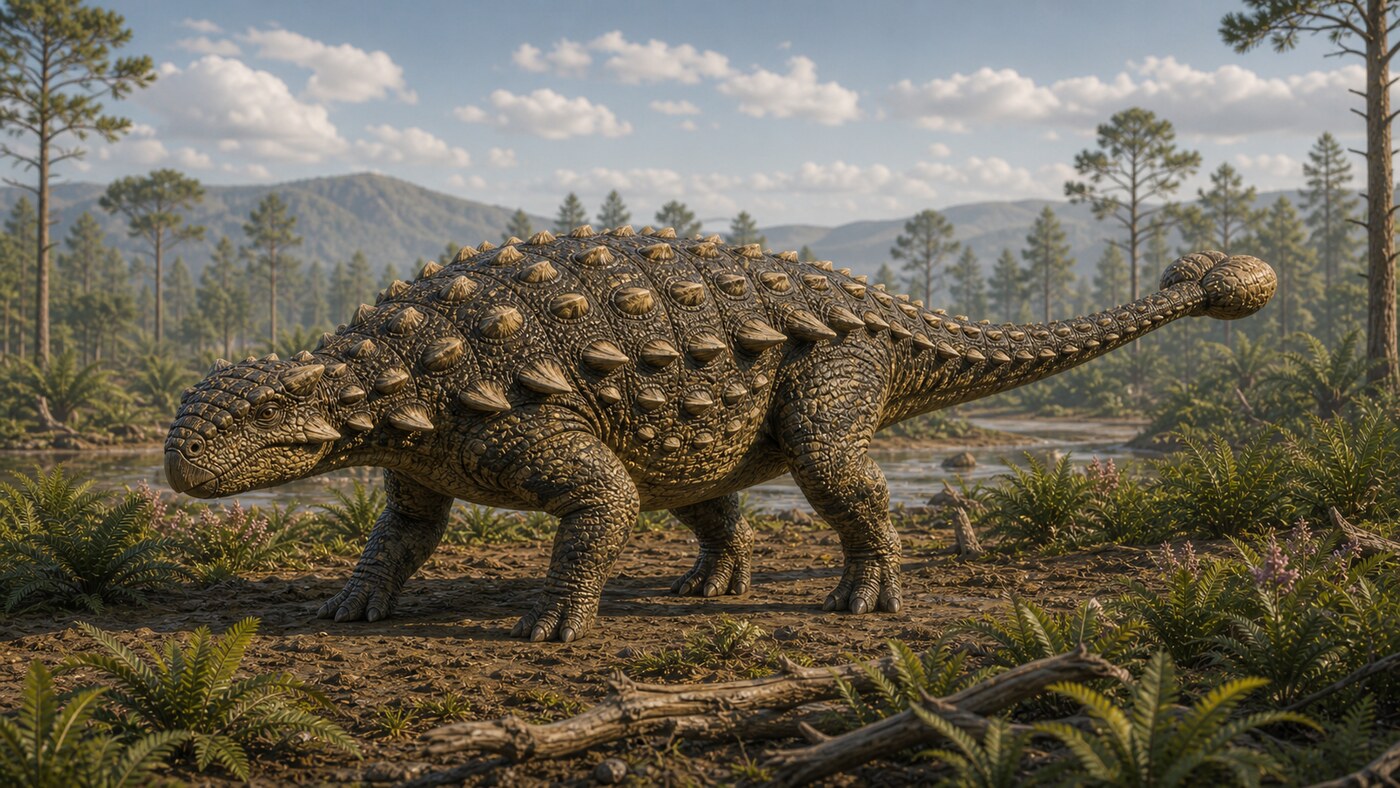
Ankylosaurus was a heavily armored plant-eating dinosaur from the Late Cretaceous Period. It lived near the end of the dinosaur age in North America, sharing its world with animals such as Tyrannosaurus rex and Triceratops.
Its name means fused lizard, a reference to the stiff, reinforced nature of its body. Ankylosaurus was built like a living tank, with armor across its back and a powerful club at the end of its tail.
Armor across the body
Ankylosaurus had bony plates called osteoderms embedded in its skin. These formed protective armor over the neck, back, and sides. Some armor pieces may have included spikes or knobs, making it difficult for predators to bite safely.
Even the skull was broad and reinforced. The animal's low body helped protect its underside, while the armored top made it a difficult target.
The tail club
The tail club is the most famous Ankylosaurus weapon. It was made from enlarged bones at the tail tip, supported by stiffened tail vertebrae. A strong sideways swing could have delivered a serious blow.
Scientists debate exactly how often it used the club in predator defense versus contests with other ankylosaurs. Either way, it was a remarkable adaptation.
Diet and lifestyle
Ankylosaurus was an herbivore. It had a beak for cropping plants and teeth suited for processing vegetation more simply than the dental batteries of some other plant-eaters.
It probably fed close to the ground, eating ferns, low shrubs, and other available plants. Its defense strategy was not speed. It relied on armor, mass, low posture, and the tail club.
Ankylosaurus in its ecosystem
Living alongside T. rex made defense important. A predator might have found Ankylosaurus difficult and dangerous to attack, especially if the tail club could strike the legs or head.
Compare its defensive style with Triceratops, which used horns and a frill. For more dinosaur reading, visit the articles hub or try the games page.
Sources and further reading
- Natural History Museum: Ankylosaurus
- Natural History Museum: Tyrannosaurus
- Natural History Museum: Triceratops