Dinosaur profile
Euoplocephalus
Pronunciation
Yu-oh-plo-seff-ah-lus
Well armoured head
Armoured Dinosaur
6 - 7 meters long
Late Cretaceous
76-70 million years ago
Canada, USA
 Diet
DietHerbivore
About Euoplocephalus
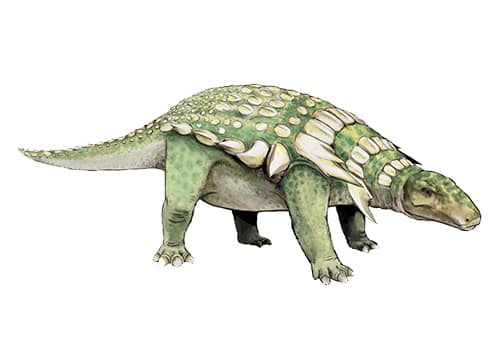
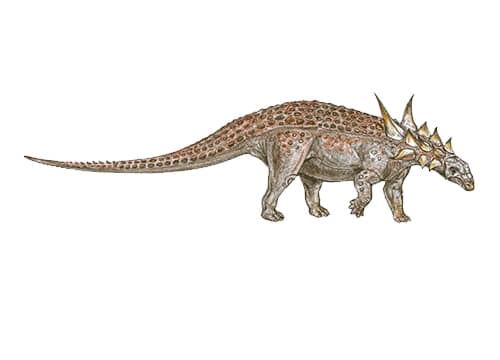
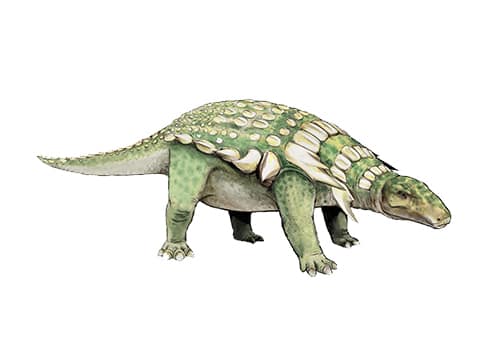
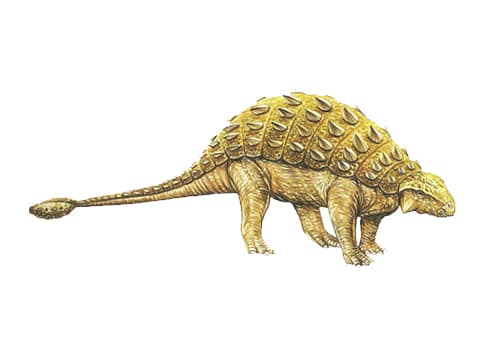
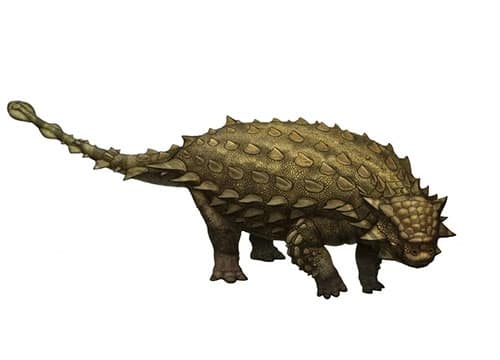
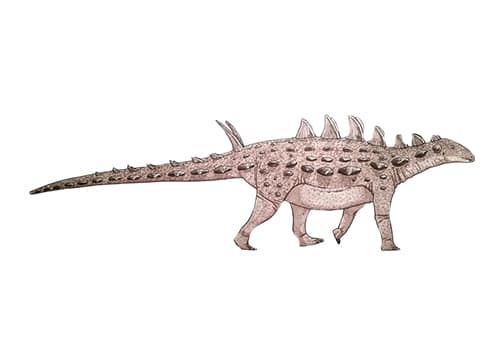
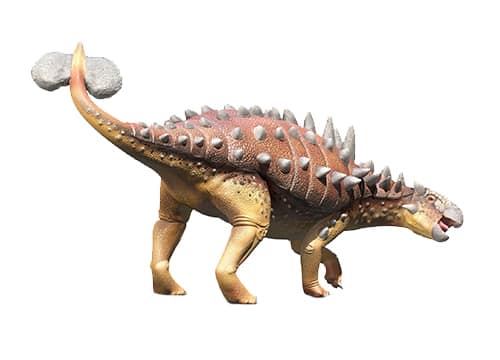
Euoplocephalus is a genus of armored dinosaur that lived during the Late Cretaceous Period, about 77-65 million years ago. It was a member of the group of dinosaurs called the ankylosaurs, which includes a diverse group of animals that are characterized by their armored bodies and club-like tails. Euoplocephalus was a medium-sized dinosaur, with an estimated length of about 20-25 feet and a weight of up to 2.5 tons. It had a small, triangular head with a pair of large, forward-facing eyes and a mouth full of small, grinding teeth. It had a long, sturdy body, with short, powerful legs and a long, flexible tail.
Euoplocephalus is known from a number of well-preserved fossil specimens, including several complete skeletons and skulls, which have helped paleontologists learn more about the anatomy and behavior of this dinosaur. It is known from Canada and the United States, and is named after the Greek words 'eu', which means 'well', and 'oplo', which means 'armed', in reference to its heavily armored body. Euoplocephalus was a herbivorous dinosaur, feeding on a variety of plants including ferns, cycads, and conifers. It is considered a primitive ankylosaur, and is thought to be closely related to other members of this group such as Ankylosaurus and Panoplosaurus. Euoplocephalus is important because it is one of the few known ankylosaurs that is known from well-preserved fossil specimens, and provides important evidence for the evolutionary relationships and diversity of these animals. It is also significant because it is one of the few known dinosaurs that is known from North America, and helps to shed light on the diversity of dinosaurs in this region.
Wikipedia image gallery
Extra reference images from Wikimedia projects. These are loaded live in your browser.
More Late Cretaceous profiles
Explore related dinosaurs with similar diet, type, period, or fossil location to Euoplocephalus.