Dinosaur profile
Eotyrannus
Eotyrannus lengi
Pronunciation
ee-oh-ti-ran-us
dawn tyrant
Large Theropod
5m
Early Cretaceous
127 - 121 million years ago
United Kingdom
 Diet
DietCarnivore
About Eotyrannus
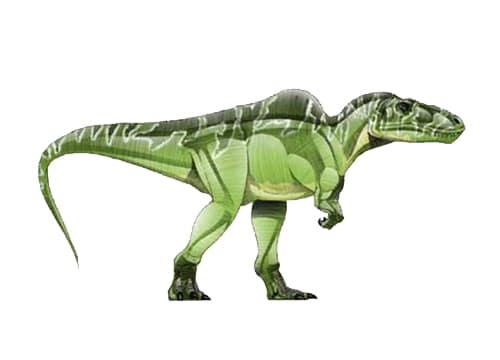
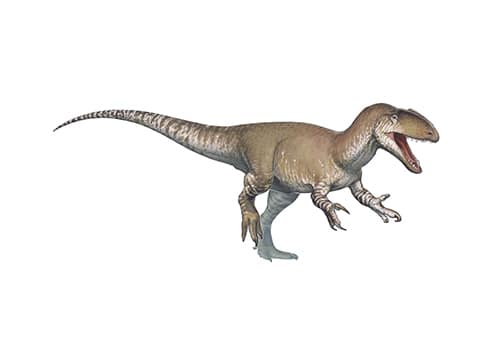
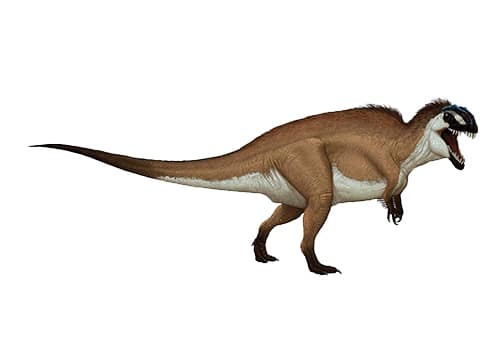
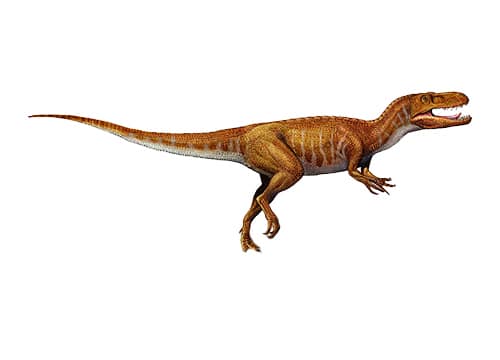
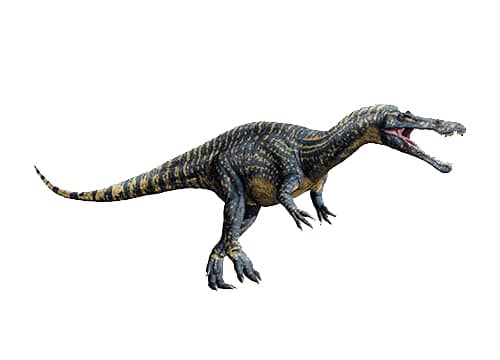
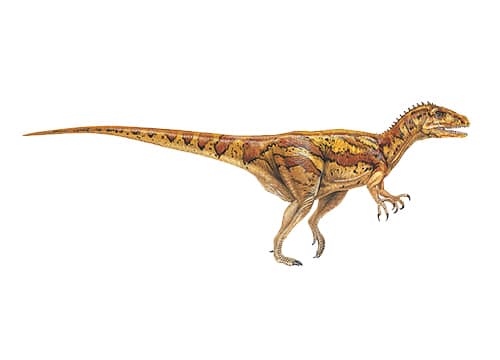
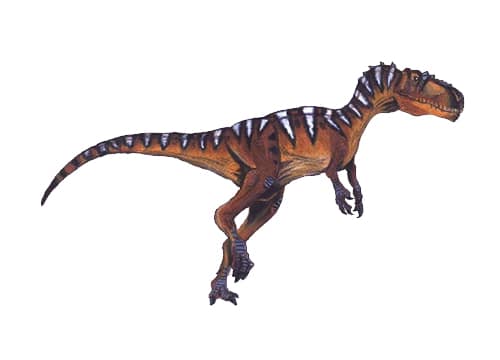
Eotyrannus is a genus of small, carnivorous dinosaur that lived during the Early Cretaceous Period, about 130-125 million years ago. It was a member of the group of dinosaurs called the tyrannosauroids, which includes a diverse group of animals that are characterized by their large size, carnivorous diets, and distinctive head crests. Eotyrannus was a small, agile dinosaur, with an estimated length of about 20-25 feet and a weight of up to 1 ton. It had a small, triangular head with a pair of large, forward-facing eyes and a mouth full of sharp, serrated teeth. It had a long, slender body, with short, powerful legs and a long, flexible tail.
Eotyrannus is known from a single, well-preserved fossil specimen, which includes a complete skull and partial skeleton. It is known from England, and is named after the Greek words 'eos', which means 'dawn', and 'tyrannos', which means 'tyrant', in reference to its small size and carnivorous diet. Eotyrannus was a carnivorous dinosaur, feeding on a variety of small to medium-sized animals including lizards, frogs, and mammals. It is considered a primitive tyrannosauroid, and is thought to be closely related to other members of this group such as Tarbosaurus and Tyrannosaurus. Eotyrannus is important because it is one of the earliest known tyrannosauroids, and provides insight into the anatomy and behavior of the earliest members of this group. It is also significant because it is one of the few known tyrannosauroids that is known from a well-preserved fossil specimen, and provides important evidence for the evolutionary relationships and diversity of these animals.
Wikipedia image gallery
Extra reference images from Wikimedia projects. These are loaded live in your browser.
More Early Cretaceous profiles
Explore related dinosaurs with similar diet, type, period, or fossil location to Eotyrannus.