What Did Dinosaurs Really Sound Like?
The short answer
Nobody has heard a living non-bird dinosaur, so scientists cannot replay the exact sound of a Tyrannosaurus rex, Triceratops, or Brachiosaurus. Fossils rarely preserve soft tissues such as vocal cords, air sacs, or throats. That means dinosaur sound is reconstructed from clues rather than recorded evidence.
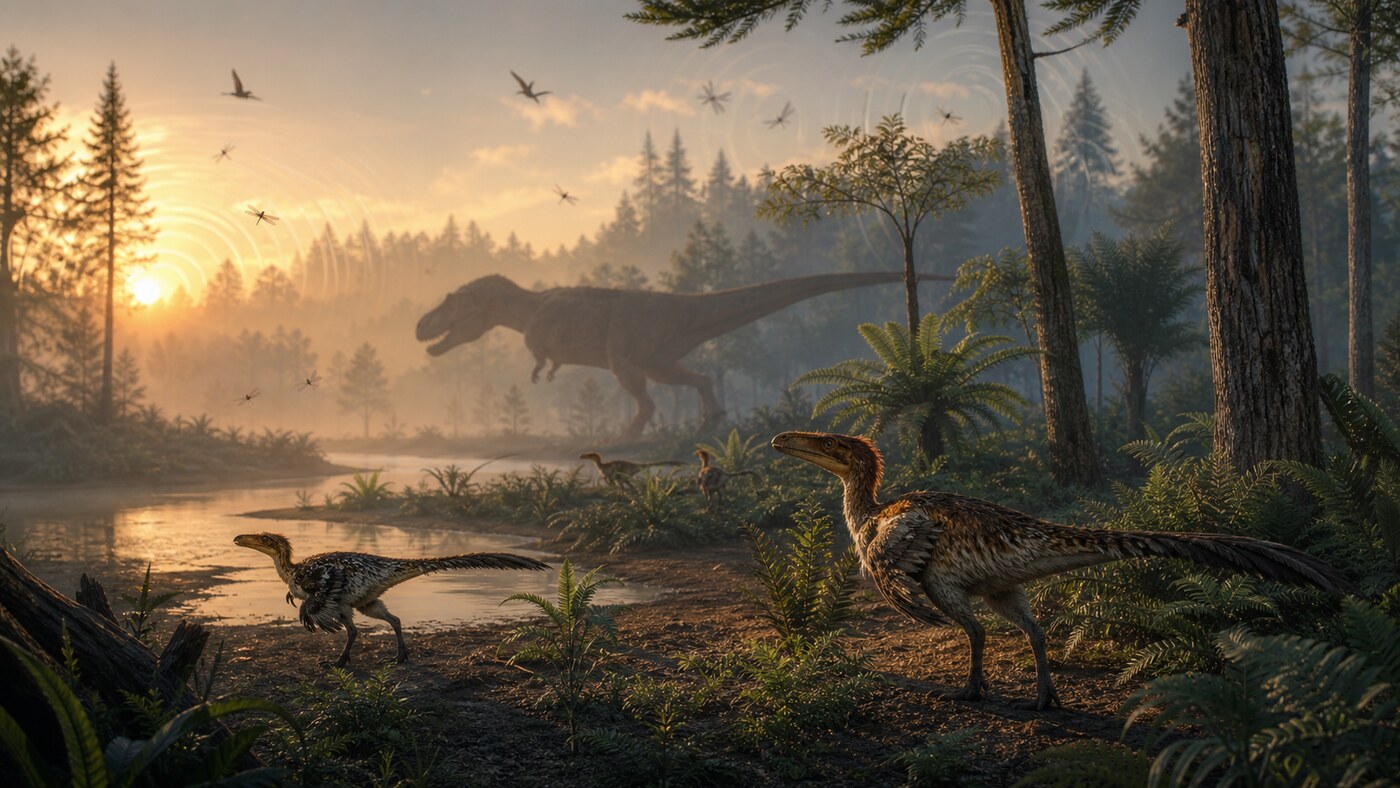
The best evidence points away from constant movie-style roaring. Some dinosaurs may have made deep rumbles, hisses, grunts, bellows, booming calls, or closed-mouth sounds. Others may have been quieter and used posture, color, movement, or display structures to communicate.
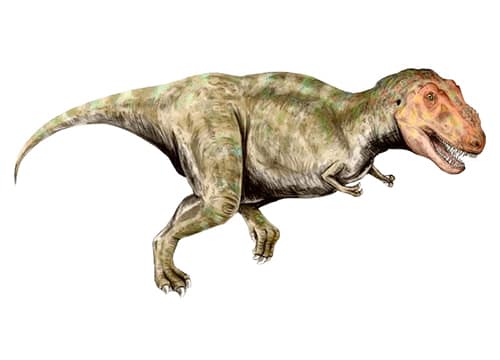
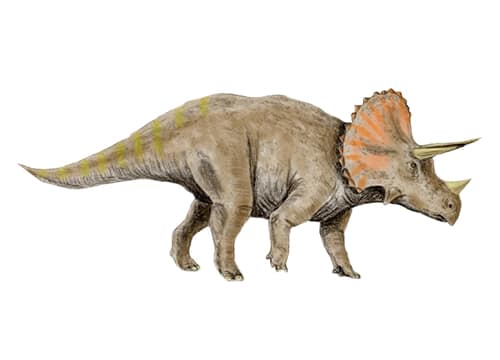
If you want to compare sound ideas with species pages, start with the site profiles for Tyrannosaurus rex and Triceratops.
Why dinosaur sounds are hard to know
Sound depends on anatomy that usually decays before fossilization. A skull can reveal the shape of the nose, mouth, and air passages, but it cannot always show exactly how air moved through the animal. Even when a fossil skull is complete, scientists still need to infer how muscles, membranes, and organs worked.
Birds are living dinosaurs, so they matter a lot in this research. Crocodiles are also useful because they are close living relatives of dinosaurs within the broader archosaur family tree. Both groups can make impressive calls without sounding like a lion or tiger. That is a reminder that dinosaur voices may have been stranger than familiar mammal roars.
Did dinosaurs roar?
Some large dinosaurs may have produced loud calls, especially if they needed to communicate across long distances. A huge body can help make low-frequency sound, and low sounds travel well through open habitats. A giant sauropod might have made deep, resonant calls that people would feel as much as hear.
But a roar is a mammal-style expectation. Many reptiles and birds use hisses, booms, croaks, rattles, honks, and closed-mouth vocalizations. A theropod like T. rex might have produced a low rumble instead of an open-jawed roar. A horned dinosaur like Triceratops may have combined sound with visual display from its horns and frill.
Sounds, games, and imagination
Because the evidence is incomplete, dinosaur sound design is a mix of science and careful imagination. That is why dinosaur games, films, and museum experiences can sound different from one another. For interactive fun, visit the games page and compare how different dinosaurs feel when they are paired with sound.
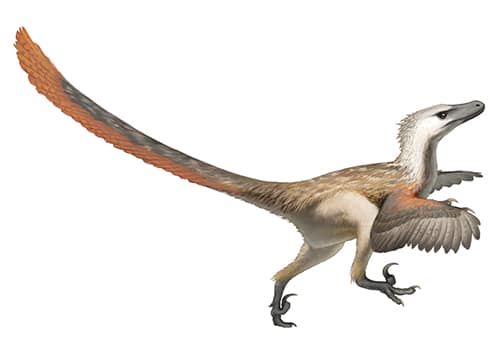
Good dinosaur sound design should still respect the science. A tiny Velociraptor should not sound like a giant monster, and a huge sauropod should not chirp like a small garden bird unless the goal is comedy.
What future fossils could reveal
Better skull fossils, preserved throat structures, and new comparisons with birds and crocodiles could improve dinosaur sound reconstructions. CT scanning is especially useful because it lets researchers study internal spaces without damaging fossils.
The most honest answer is also the most interesting one: dinosaurs almost certainly sounded diverse. The dinosaur world was not one roar. It was a whole ancient soundscape.
Sources and further reading
- Natural History Museum: What did Diplodocus sound like?
- Natural History Museum: Jurassic sounds teaching resource
- Natural History Museum: Dino Directory
- More dinosaur articles: Articles hub
Dinosaurs to explore next
Continue from this article into profile pages with sounds, pronunciation, images, and quick facts.