Velociraptor Facts: Size, Feathers, Claws, and Movie Myths
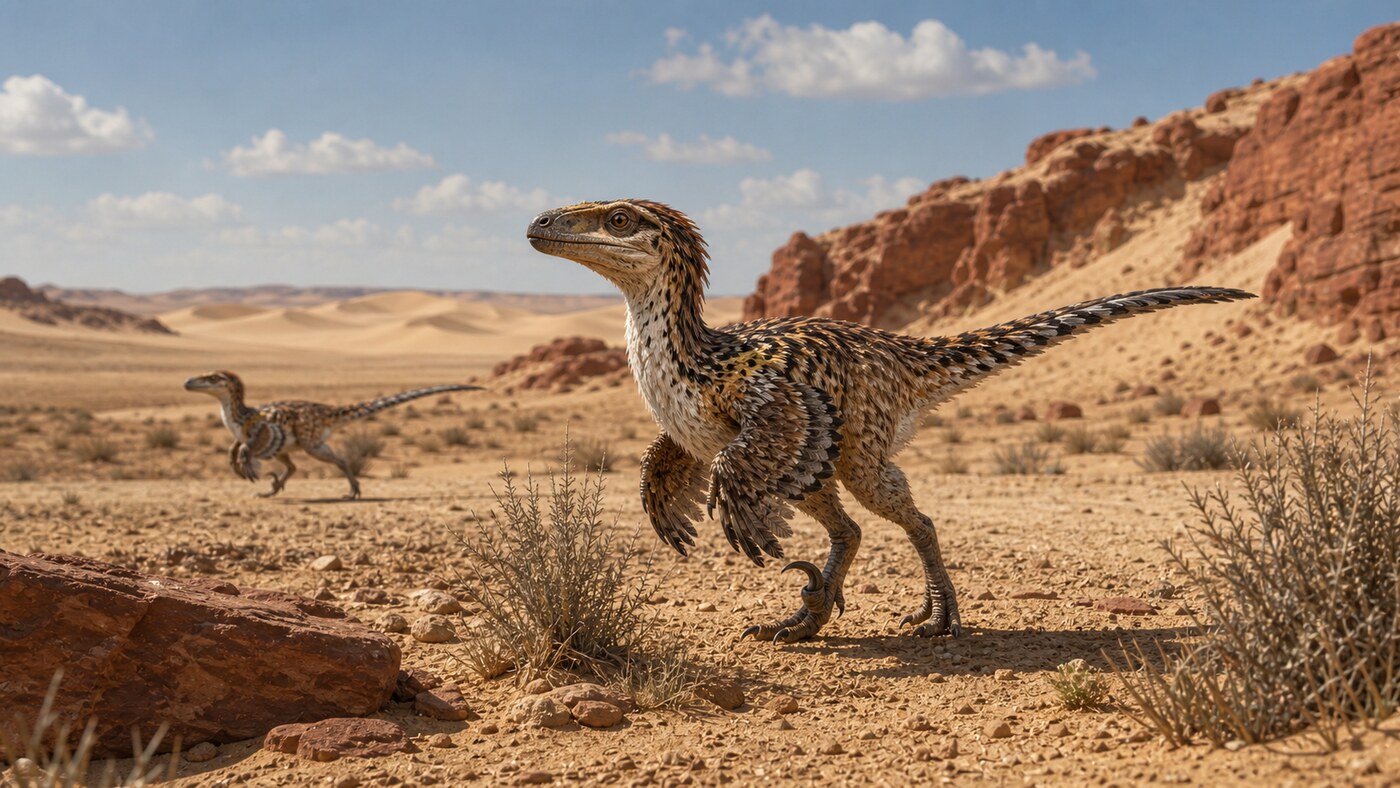
The real Velociraptor
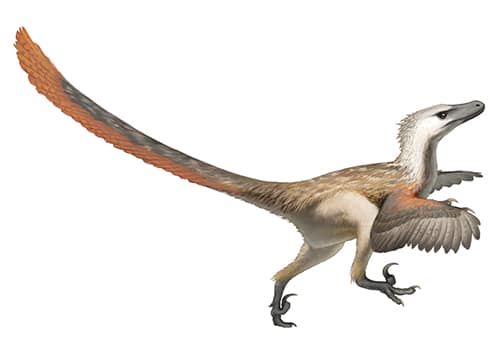
Velociraptor was much smaller than the creature many people know from movies. The real animal was about the size of a large turkey, with a long tail, sharp teeth, grasping hands, and a famous sickle-shaped claw on each foot.
It lived during the Late Cretaceous in what is now Mongolia and nearby regions of Asia. Its fossils show a fast, lightly built predator adapted for catching small animals.
Feathers, not scales only
Velociraptor was a dromaeosaur, a group closely related to birds. Evidence from related dinosaurs, and features on Velociraptor fossils, supports the view that it had feathers. These feathers were probably not for powered flight. They may have helped with display, balance, brooding eggs, or temperature control.
This makes Velociraptor a good example of why dinosaurs were more bird-like than older artwork suggested.
The sickle claw
The enlarged claw on the second toe is one of Velociraptor's most famous features. It may have helped pin prey, grip struggling animals, or deliver slashing injuries. Scientists still debate exactly how it was used.
The claw was part of a whole hunting system, not a single magic weapon. Velociraptor also had teeth, hands, speed, balance, and sharp senses.
Movie myths
Movie raptors are usually much larger than Velociraptor. Some of their size and shape better match larger relatives such as Deinonychus or Utahraptor. The real Velociraptor was still impressive, but it was a small predator, not a human-sized monster.
That difference makes the real animal more interesting, not less. A feathered, agile hunter from Cretaceous Asia tells us far more about dinosaur evolution than a generic movie creature.
Fossil evidence
One famous fossil preserves Velociraptor locked with Protoceratops, a small horned dinosaur. This dramatic specimen suggests that Velociraptor could attack animals close to its own size, although the exact events that buried them are still discussed.
Explore more dinosaurs through the articles page or take a break with the games section.
Sources and further reading
- Natural History Museum: Velociraptor facts
- Natural History Museum: Velociraptor directory page
- Natural History Museum: Dino Directory
Dinosaurs to explore next
Continue from this article into profile pages with sounds, pronunciation, images, and quick facts.