Tyrannosaurus Rex Facts: Size, Diet, Feathers, and Fossils
Meet Tyrannosaurus rex
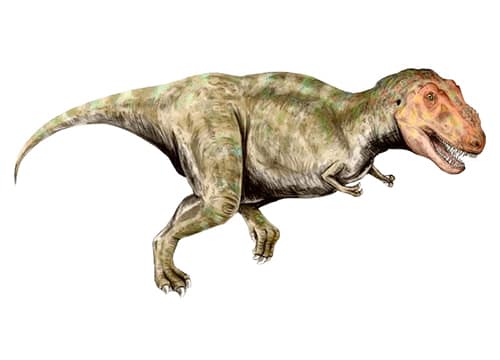
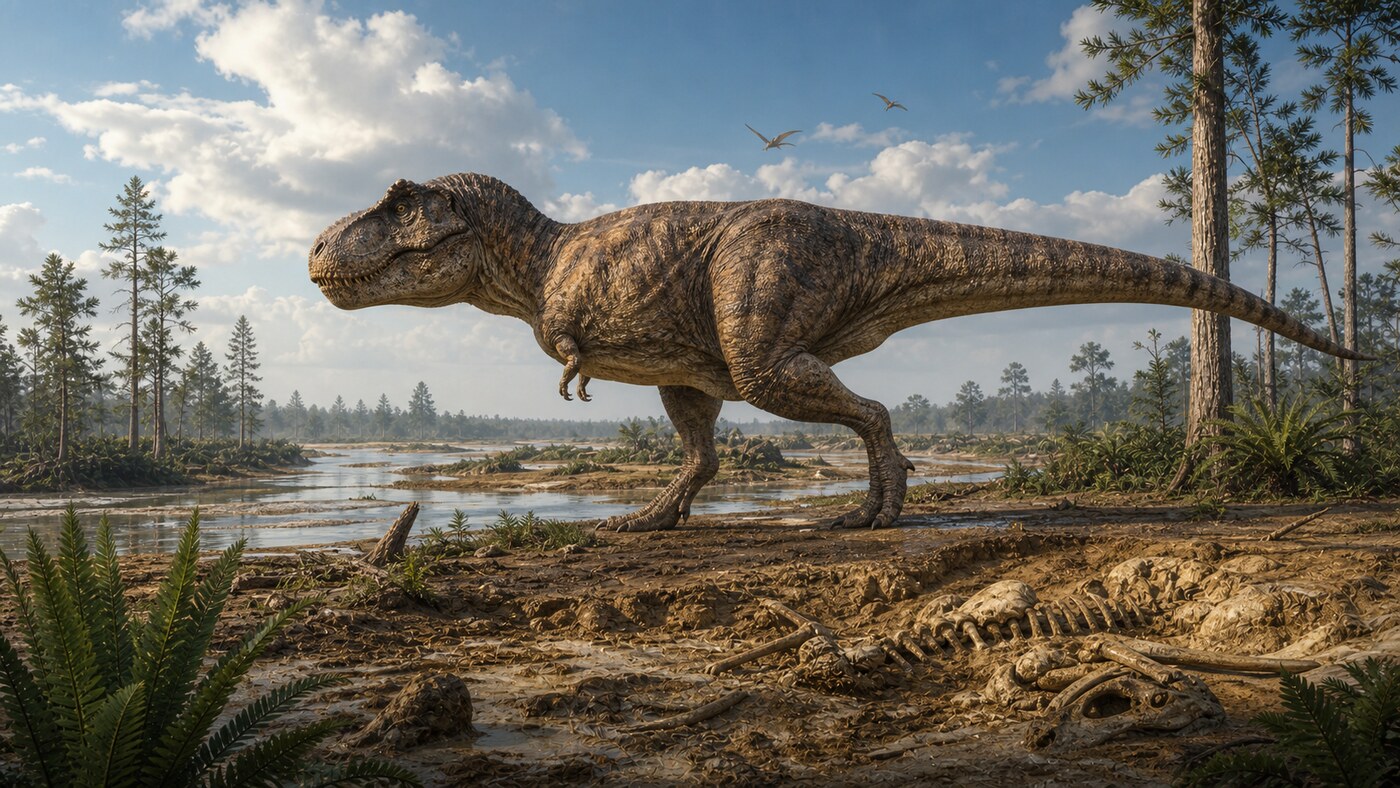
Tyrannosaurus rex lived near the end of the Cretaceous Period, about 68 to 66 million years ago. It was one of the largest meat-eating dinosaurs and remains the most famous predator in dinosaur science.
Its name means tyrant lizard king, and the animal earned that dramatic title. T. rex had a massive skull, banana-shaped teeth, powerful legs, and a bite built for crushing bone. You can also visit the local Tyrannosaurus rex dinosaur page for a quick profile.
Size and body shape
An adult T. rex could reach roughly 12 meters in length. It stood with its body balanced over strong hind limbs, using a heavy tail as a counterweight. Its arms were short, but they were not useless. Each arm had two claws and strong muscles for its size.
The head was the main weapon. T. rex had deep jaws and thick teeth that could bite into flesh and bone. Fossil evidence suggests it could both hunt living prey and scavenge carcasses when the opportunity appeared.
Diet and hunting
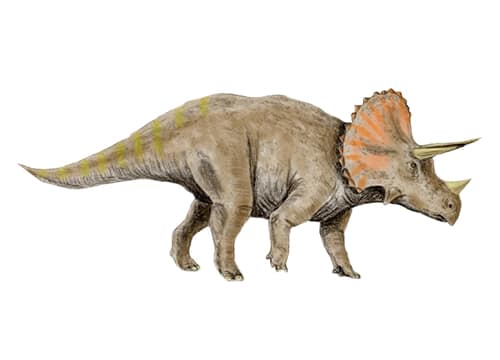
T. rex lived alongside large plant-eaters such as Triceratops and hadrosaurs. Bite marks on fossils show that tyrannosaurs fed on large dinosaurs, and some healed bite marks show that prey animals sometimes survived attacks.
Scientists continue to study how fast T. rex could move, how it detected prey, and how much it relied on smell. Its skull shows large areas for jaw muscles and sensory systems, making it a highly specialized predator.
Did T. rex have feathers?
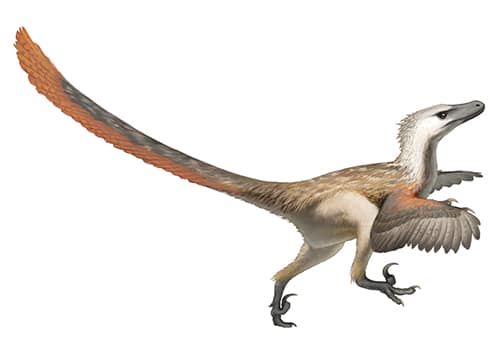
The feather question is still debated. Some tyrannosaur relatives had feathers, especially smaller species. T. rex itself may have had some feathering, particularly when young, but fossil skin impressions from large tyrannosaurs also show scaly areas.
The safest view is that T. rex belonged to a feather-capable dinosaur family, but its exact adult covering is not fully known. It may have combined scales and limited feathers depending on age, body region, and temperature.
Why T. rex still matters
T. rex is not just popular. It is scientifically important because many fossils have been found, including skulls, limbs, teeth, and partial skeletons. Each specimen helps researchers test ideas about growth, injury, feeding, and behavior.
For a different kind of dinosaur experience, try the games page after reading, or explore more fossil topics in the articles section.
Sources and further reading
- Natural History Museum: Tyrannosaurus
- Natural History Museum: Dino Directory
- Local profile: Tyrannosaurus rex
Dinosaurs to explore next
Continue from this article into profile pages with sounds, pronunciation, images, and quick facts.