DINOSAUR SCIENCE · 2 MIN READ
Stegosaurus Facts: Plates, Spikes, and Jurassic Life
Explore Stegosaurus plates, tail spikes, plant eating habits, fossils, and life in the Jurassic world.
By Dinosaur Sounds
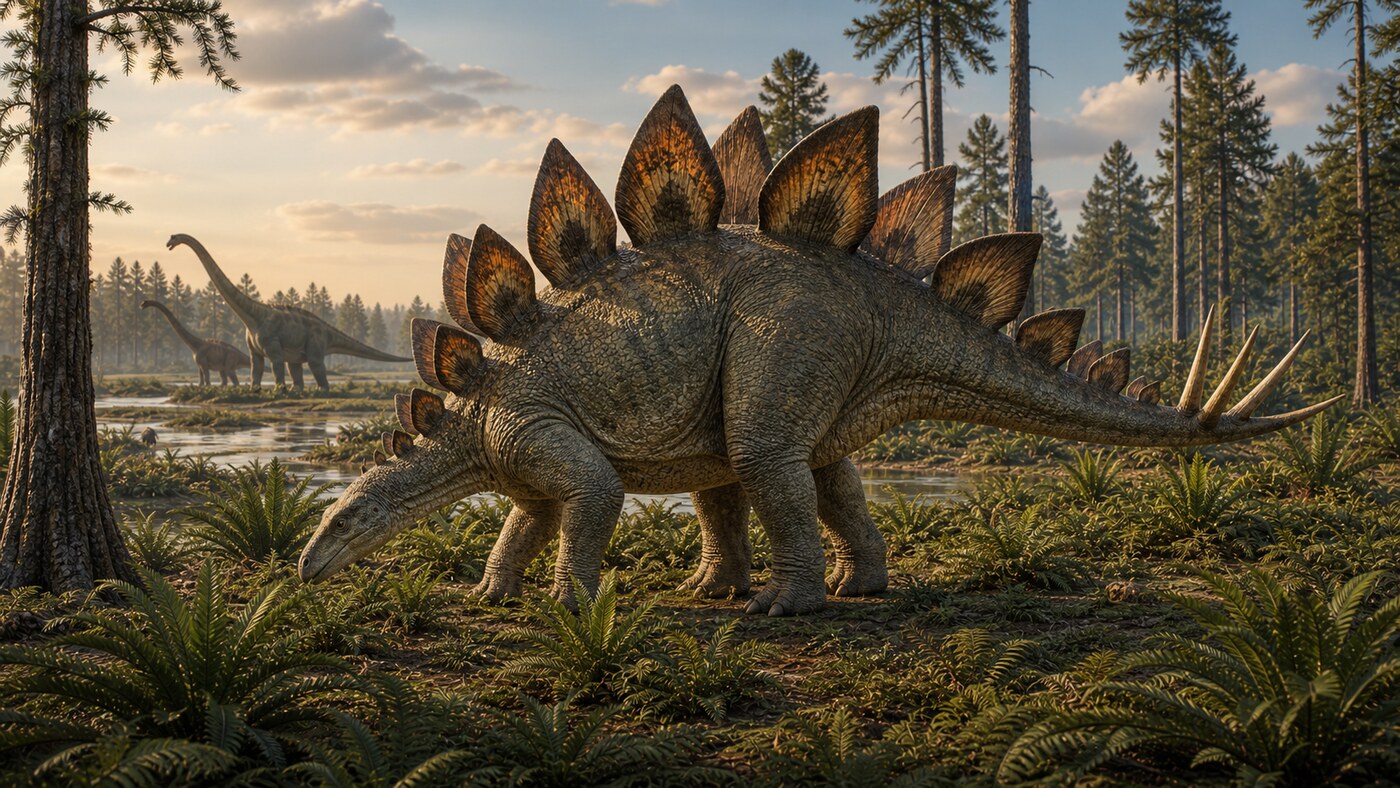
Meet Stegosaurus
Stegosaurus lived during the Late Jurassic Period, about 155 to 150 million years ago. It is famous for the tall plates along its back and the sharp spikes at the end of its tail.
Although it looked heavily armed, Stegosaurus was a plant-eater. It shared Jurassic landscapes with large sauropods and predators such as Allosaurus.
Plates on the back
The plates of Stegosaurus were not flat armor covering the body. They stood upright in two rows along the back. Scientists have suggested several possible functions, including display, species recognition, and heat exchange.
The display idea is especially important. Big plates could make an individual look larger, help animals recognize each other, or signal maturity. The exact color of the plates is unknown, but they may have been visually striking in life.
Tail spikes
The tail spikes of Stegosaurus are sometimes called a thagomizer. They were real defensive weapons. A swinging tail with long spikes could injure a predator that came too close.
This defense would have mattered because Stegosaurus lived alongside large carnivores. A predator such as Allosaurus may have targeted young, weak, or isolated individuals, while a healthy adult Stegosaurus was risky prey.
Diet and daily life
Stegosaurus had a small head, a beak, and simple teeth compared with many later plant-eating dinosaurs. It likely browsed on low plants, including ferns, cycads, horsetails, and other Jurassic vegetation.
Its front legs were shorter than its back legs, giving the body a sloped posture. This body shape helped define its unique silhouette.
Why Stegosaurus is memorable
Stegosaurus is one of the easiest dinosaurs to recognize because its body plan is so distinct. Plates, spikes, small head, and heavy body all combine into a dinosaur unlike anything alive today.
Continue exploring with more dinosaur articles on the articles page or try a dinosaur activity in the games section.
Sources and further reading
- Natural History Museum: Stegosaurus
- Natural History Museum: Allosaurus
- Natural History Museum: Dino Directory