DINOSAUR SCIENCE · 2 MIN READ
Brachiosaurus Facts: The Tall Sauropod of the Jurassic
Facts about the tall Jurassic sauropod, including its long neck, front legs, diet, size, and fossil history.
By Dinosaur Sounds
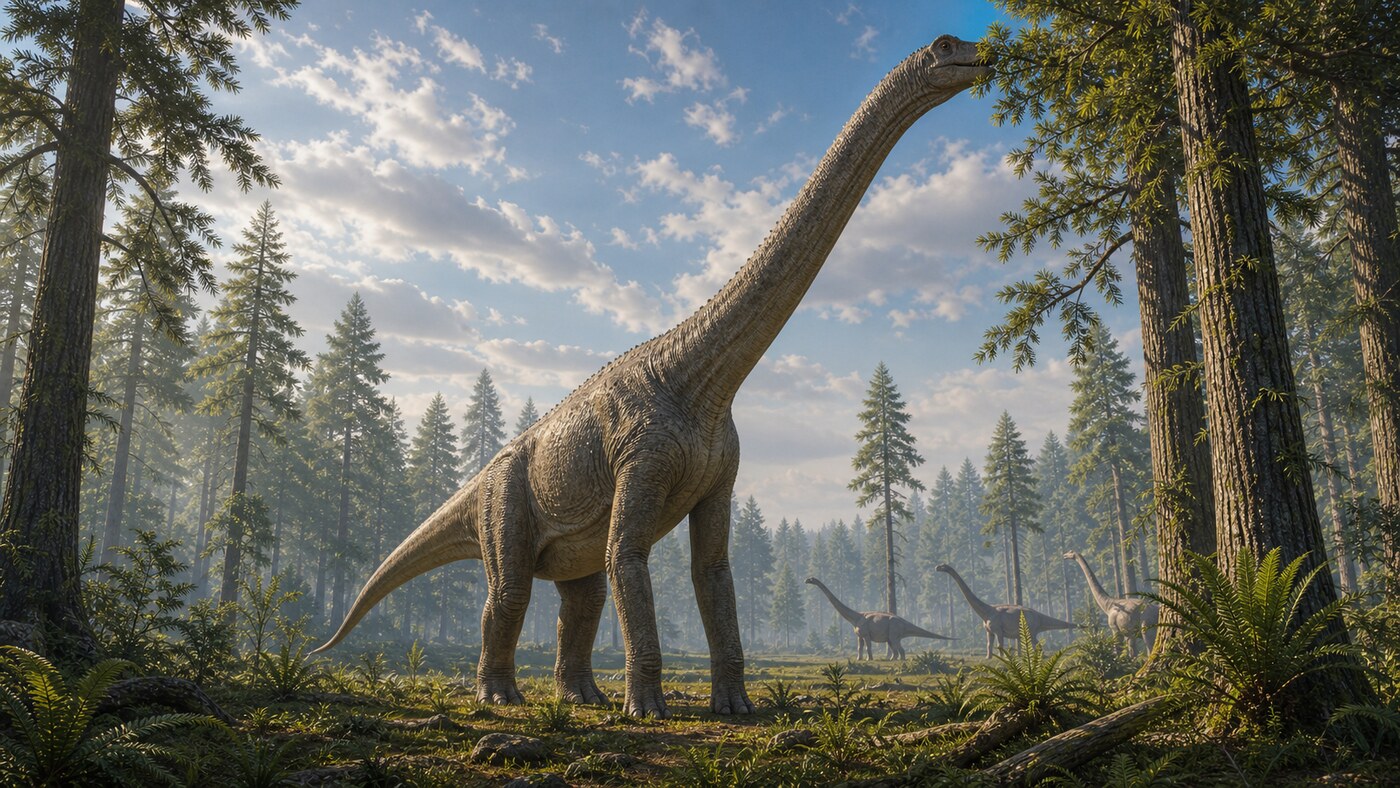
The tall sauropod
Brachiosaurus was a giant plant-eating dinosaur from the Late Jurassic Period. It belonged to the sauropods, the long-necked dinosaurs that included some of the largest land animals ever known.
What made Brachiosaurus stand out was its body shape. Its front legs were longer than its back legs, giving it a high-shouldered posture. This helped make it one of the tallest famous dinosaurs.
Neck, legs, and posture
Brachiosaurus had a long neck, a relatively short tail for a sauropod, and a deep chest. Its name means arm lizard because the front limbs were so prominent.
Older artwork often showed sauropods living mostly in water, but modern science treats Brachiosaurus as a land animal. Its body was built to support huge weight on strong pillar-like legs.
What did Brachiosaurus eat?
Brachiosaurus was an herbivore. Its height may have helped it browse from trees and tall vegetation that lower plant-eaters could not reach. It likely swallowed plant material without chewing it in the mammal style.
Its teeth were suited for cropping vegetation. Like other sauropods, it needed enormous amounts of food to fuel its body, so feeding would have taken up much of daily life.
Did it make deep sounds?
No one knows the exact voice of Brachiosaurus. Large body size could support low-frequency calls, but the soft tissues needed for sound do not usually fossilize.
Scientists compare dinosaurs with living birds and crocodiles to make careful guesses about ancient sounds. For more on that topic, read What Did Dinosaurs Really Sound Like?.
Why Brachiosaurus matters
Brachiosaurus helped shape the popular image of sauropods as towering giants. It also shows that not all long-necked dinosaurs fed in the same way. Body proportions mattered, and Brachiosaurus was built differently from many other sauropods.
Visit the games page for interactive dinosaur fun, or keep reading from the articles hub.
Sources and further reading
- Natural History Museum: Brachiosaurus
- Natural History Museum: What did Diplodocus sound like?
- Natural History Museum: Dino Directory